Are Silkie Chickens Good Pets? The Truth About These Fluffy Birds
Updated: May 22
Are Silkie Chickens Good Pets? The Truth About These Fluffy Birds (Complete Guide for North Texas & Beyond)

Silkie chickens have a reputation that’s hard to ignore. With their soft, fur-like feathers, calm temperament, and almost “toy-like” appearance, they stand out in any flock. But the real question most people are asking before they buy is simple:
Are Silkie chickens actually good pets—or just pretty birds?
If you’re in North Texas (Weatherford, Parker County, Fort Worth area) or anywhere else in the U.S. considering backyard chickens, this guide breaks down the real truth about Silkies: temperament, care requirements, egg production, climate adaptability, and whether they’re worth adding to your flock or family.
By the end, you’ll know exactly whether Silkie chickens are the right fit—and what to expect if you decide to raise them.
What Is a Silkie Chicken?
The Silkie is a unique and ancient breed of chicken known for its distinct fluffy plumage that feels more like fur or down than traditional feathers.
Scientifically classified as a domesticated chicken, the Silkie is most often kept as a pet, ornamental bird, or broody hen for hatching eggs rather than a commercial egg producer.
Key characteristics of Silkie chickens include:
* Fluffy, hair-like feathers (no barbicels)
* Black or dark blue skin and bones
* Five toes instead of four (most chickens have four)
* Calm, gentle temperament
* Strong broody instinct (excellent mothers)
* Small to medium size
Because of their unique appearance and personality, Silkies are often one of the first breeds new chicken owners fall in love with.

Are Silkie Chickens Good Pets?
Yes—Silkie chickens are widely considered one of the best backyard chicken breeds for pets.
But that answer comes with important context.
They are not “production birds.” They are not raised for maximum eggs or meat yield. Instead, they excel in three specific areas:
Temperament
Interaction with humans
Ease of handling
Silkies are often described as:
Calm
Friendly
Non-aggressive
Tolerant of children
Easy to hold and socialize
For families, hobby farmers, and even first-time chicken owners in North Texas suburbs like Weatherford, Aledo, and the greater Fort Worth area—or rural properties across the U.S.—Silkies are often the most “pet-like” chicken available. Their calm behavior makes them especially appealing for households that want chickens more as companion animals than livestock.
They also tend to bond strongly with their caretakers when handled regularly, often becoming surprisingly trusting and interactive compared to standard chicken breeds. Many owners report Silkies following them around the yard, responding to routines, and even allowing close handling without stress. This makes them ideal for teaching children responsibility and animal care in a safe, low-risk way.
However, they do have limitations that matter depending on your goals.

Silkie Chicken Temperament: Why People Love Them
If chickens had personality rankings, Silkies would be near the top for friendliness.
1. Extremely Gentle Nature
Silkies are known for being calm even in busy environments. They are not flighty or aggressive and rarely show dominance behavior.
This makes them ideal for:
Kids learning to handle animals
Backyard flocks with mixed breeds
People who want low-stress pets
Their steady, unbothered temperament also makes them easier to integrate into daily farm routines without causing disruption. They are less likely to panic when approached, making feeding, coop maintenance, and general handling much simpler compared to more reactive chicken breeds. Over time, they often become comfortable being picked up, held, and even carried short distances without resistance, which adds to their reputation as one of the most manageable and family-friendly chicken breeds available.
2. Highly Tameable
Silkies respond well to regular handling. With consistent interaction, they will often:
Follow people around the yard
Eat from your hand
Allow picking up without stress
They tend to recognize routine caretakers quickly and can become surprisingly attached over time, especially when they are raised from chicks. Many owners find that Silkies actively seek attention and will cluster around familiar people during feeding or free-range time.
3. Low Aggression Levels
Roosters exist in every breed, but Silkie roosters are typically less aggressive than many standard breeds.
This doesn’t mean they’re always docile, but compared to breeds like Rhode Island Reds or game breeds, Silkies are significantly easier to manage.
Even in mixed flocks, they are less likely to instigate fights or assert dominance aggressively, which makes them a practical choice for families or hobby farmers who want a calmer, more predictable flock dynamic overall.

Do Silkie Chickens Lay Eggs?
This is one of the most important questions for buyers.
Yes, Silkies do lay eggs—but not in high volume.
A typical Silkie hen lays:
About 100–120 eggs per year (on average)
Smaller cream-colored eggs
Seasonal laying patterns depending on daylight
That’s significantly less than production breeds that may lay 250–300 eggs per year.
What this means in real life:
Silkies are not ideal if your goal is maximum egg production.
But they are excellent if:
You want pets that also produce some eggs
You enjoy hatching chicks naturally
You want a sustainable backyard flock experience
In practice, many Silkie owners value consistency and personality over volume. Their eggs are often considered a bonus rather than a primary output, and their strong broody instinct means they are frequently used for incubating and raising chicks for other breeds as well
Silkie Chickens as Mothers (One of Their Biggest Strengths)
One of the most valuable traits of Silkies is their strong broody instinct.
A broody hen is one that wants to sit on eggs and hatch chicks naturally.
Silkies are famous for this.
They are often used to:
Hatch chicken eggs
Hatch duck eggs
Hatch quail eggs (in some cases)
For small farms or backyard breeders in North Texas, this is a huge advantage because:
You don’t need incubators
You get natural chick raising
Mother hens do most of the work
They are known for being extremely dedicated once they go broody, often sitting tightly on nests for long periods without leaving except for food and water breaks. Their protective behavior also helps improve hatch success rates, especially for beginners who are still learning incubation management.
If your goal is breeding or growing your own flock, Silkies are one of the best starter breeds available.

Are Silkie Chickens Good for North Texas Weather?
This is where location matters.
North Texas climates—especially Weatherford, Fort Worth, and surrounding Parker County areas—bring:
Hot summers (often over 100°F)
Humid conditions
Occasional cold snaps in winter
Wind and dust exposure
Heat Tolerance
Silkies are not heat-hardy compared to standard chickens.
Because of their dense feathering, they can overheat more easily.
To keep them healthy in Texas summers:
Provide constant shade
Ensure strong airflow in coops
Offer cool water at all times
Use fans in extreme heat when needed
It also helps to avoid handling them during peak afternoon heat, since stress and body temperature can rise quickly. Many North Texas owners adjust routines to early morning or evening care during July and August to reduce heat exposure.
Cold Tolerance
Silkies are actually more cold-tolerant than many people expect, especially if:
They stay dry
They have draft-free shelter
They are not exposed to freezing rain or ice
Their feather structure does not provide the same waterproofing as standard chickens, so moisture control becomes more important than temperature alone in winter conditions.
Bottom line for North Texas:
Silkies can thrive in Texas—but they require management during heat waves, especially in July and August.
Housing Requirements for Silkie Chickens
Silkies don’t require complicated housing, but they do need protection.
Coop Essentials:
Dry, draft-free environment
Low roosting bars (they don’t fly well)
Predator-proof fencing
Good ventilation
Clean bedding (pine shavings recommended)
A well-designed coop doesn’t have to be expensive, but it does need to prioritize safety and cleanliness. Silkies are especially prone to getting their feathers soiled, so keeping bedding dry and refreshed regularly helps prevent skin issues and parasites. Elevated nesting boxes can also help keep eggs cleaner and easier to collect, especially during wet weather in North Texas.
Important Note:
Because Silkies cannot fly well, they are:
Easier to contain
But more vulnerable to ground predators
In rural North Texas areas, this means predator protection is critical (raccoons, coyotes, dogs).
Adding secure hardware cloth instead of simple chicken wire can significantly improve safety. Nighttime locking systems or automatic coop doors are also a strong upgrade for owners who want added protection and peace of mind.
Do Silkie Chickens Get Along With Other Chickens?
Yes—but with caution.
Silkies are:
Low on the pecking order
Non-confrontational
Easily bullied by larger breeds
Because of their gentle nature and smaller size, they tend to avoid conflict rather than engage in it. This makes them peaceful flock members, but it also means they can struggle in more competitive or aggressive environments where dominant birds control feed, space, and nesting areas.
Best flock strategy:
Keep Silkies together as a group OR
Introduce them carefully into calm flocks
Slow integration is important. Using a “see but don’t touch” setup for a few days or weeks can help reduce stress and establish familiarity before full integration.
Avoid mixing them with:
Highly aggressive breeds
Large production roosters
Overcrowded coops
Space is especially important—Silkies need room to move away from dominant birds without being trapped or cornered.
In many backyard setups, Silkies do best in a “gentle flock” environment where temperament is prioritized over production. Providing separate feeding stations can also help ensure they get enough access to food without competition pressure from larger, faster breeds.
What Makes Silkie Chickens So Popular?
Silkies are one of the most searched backyard chicken breeds in the U.S., and for good reason. Their combination of unusual appearance, gentle temperament, and strong breeding appeal makes them stand out in both rural and suburban chicken-keeping communities.
1. Appearance
They look completely different from standard chickens:
Fluffy like a stuffed animal
Rounded, soft silhouette
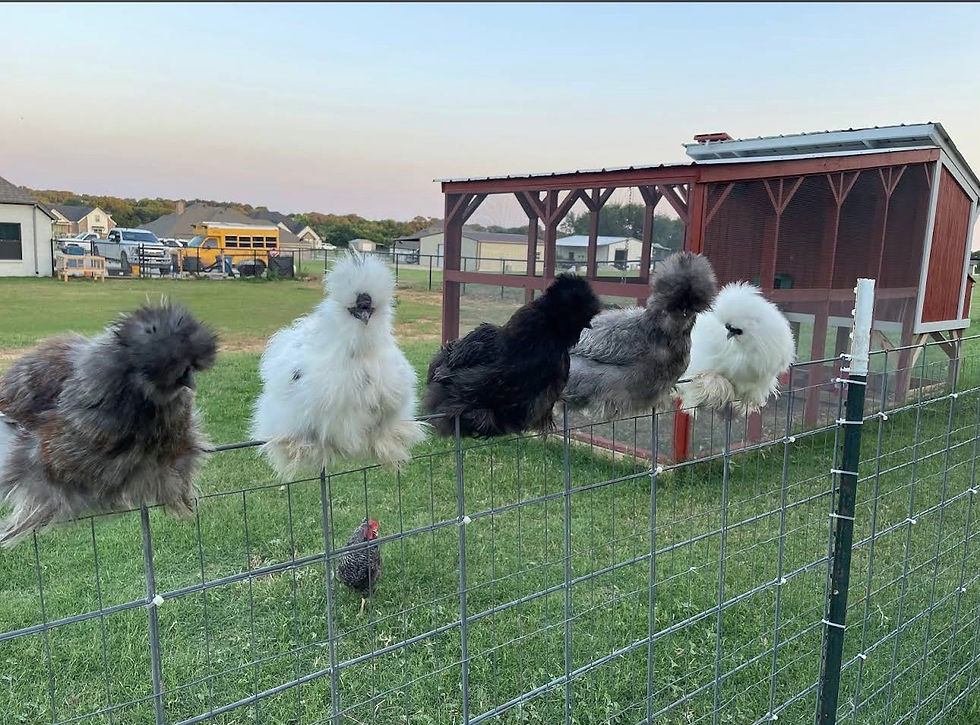
Unique coloring options (white, black, blue, buff)
Their feather structure gives them a “toy-like” or ornamental quality that attracts attention immediately. Many first-time chicken owners choose Silkies purely because of how visually unique they are, and they often become the centerpiece of backyard flocks.
2. Personality
They are:
Calm
Friendly
Curious
Social
Silkies tend to develop recognition for their caretakers and respond well to routine interaction. Over time, they often become more comfortable with handling than most other breeds, which makes them especially appealing for families and beginners.
3. Family-Friendly Nature
Silkies are one of the safest breeds for children due to their docile temperament. They rarely react aggressively, even when startled, which reduces the risk of injury or stressful interactions. This makes them an excellent “starter chicken” for kids learning responsibility through animal care.
4. Breeding Demand
Because of their popularity, Silkies are always in demand:
Backyard chicken owners
Hobby breeders
4-H families
Homesteaders
They are also widely used in small-scale breeding programs because of their strong broody instincts and consistent ability to hatch and raise chicks naturally. This makes them not only pets, but also valuable utility birds in sustainable flock-building systems.

Common Misconceptions About Silkie Chickens
Myth 1: “They are not real chickens”
False. They are fully domesticated chickens—just a unique genetic variation. Silkies belong to the same species as all other backyard chickens and can interbreed with standard breeds. The main difference is their feather structure, which lacks barbicels, giving them their signature fluffy, hair-like appearance.
Myth 2: “They are fragile and can’t survive outside”
They are hardy when properly managed. They just require weather awareness. While their appearance makes them look delicate, Silkies can adapt well to outdoor living when they are given proper shelter, protection from predators, and climate-appropriate care. Many owners successfully raise them year-round in varied climates, including hot Texas summers and mild winters.
Myth 3: “They don’t lay eggs at all”
They do lay eggs—just fewer than production breeds. Their egg production is modest, but consistent under good conditions. Most owners view egg-laying as a secondary benefit rather than the primary purpose of keeping them.
Are Silkie Chickens Worth It?
This depends on your goals.
Silkies are often considered a lifestyle breed rather than a production breed. They are valued more for companionship, breeding qualities, and enjoyment than for output metrics like egg count or meat yield.
Silkies are a great fit if you want:
Friendly backyard pets
Chickens your kids can handle
Natural egg hatching
A visually unique flock
Low-aggression birds
They also add a strong ornamental and educational value to a backyard setup, making them popular with families, homesteaders, and small-scale breeders who enjoy raising animals with personality and interaction.
Silkies may NOT be ideal if you want:
High egg production
Fast meat production
Extremely low-maintenance heat tolerance without management
They require a bit more environmental attention, especially in hot climates like North Texas, but they reward that care with strong bonding and breeding utility.
For most backyard chicken owners in North Texas and across the U.S., Silkies are absolutely worth it—especially when the goal is enjoyment, long-term flock building, and raising chickens that feel more like pets than livestock.

Why Silkie Chickens Are a Smart Choice for North Texas Buyers
In areas like Weatherford, Parker County, and the greater Fort Worth region, backyard chickens are becoming more popular for:
Food independence
Hobby farming
Family education
Small-scale homesteading
This regional trend is not just a hobby movement—it’s part of a larger shift toward self-reliance and rural lifestyle expansion across North Texas. As property sizes increase outside the metro area, more families are looking for livestock that is manageable, low-risk, and family-friendly. Silkies fit directly into that demand profile because they are approachable even for first-time chicken owners who may have no prior experience with poultry.
Silkies fit perfectly into that lifestyle because they offer:
Low stress handling
Strong personality connection
Adaptability with proper care
High demand in local markets
They are especially valuable in suburban and semi-rural environments where neighbors are close and noise, aggression, or escape risk needs to be minimal. Unlike more flighty or territorial breeds, Silkies remain calm and contained, which makes them easier to integrate into residential-scale setups common in Parker County and surrounding areas.
Another key advantage in North Texas is their marketability. There is consistent demand from:
Backyard chicken keepers upgrading their flocks
Families looking for kid-friendly pets
4-H participants and youth agricultural programs
Small homesteaders building breeding programs
Because Silkies reproduce well through natural brooding, local breeders can scale without expensive incubator systems. This keeps overhead low while maintaining consistent production potential.
For buyers, that means:
Easy to fall in love with due to appearance and temperament
Easy to sell or trade within chicken communities and local farm groups
Consistently sought after year-round, not just seasonally
In practical terms, Silkies hold value well because demand is emotional as much as functional. People do not just buy them for utility—they buy them for enjoyment, which keeps turnover and resale markets active across North Texas and beyond.
They also perform well in small backyard setups, making them ideal for people transitioning from “interest in chickens” to “actual flock ownership” without feeling overwhelmed by more demanding breeds.
Final Verdict: Are Silkie Chickens Good Pets?
Yes—Silkie chickens are one of the best pet chicken breeds available.
They are not production powerhouses. They are not low-maintenance industrial birds.
Instead, they are:
Companion animals
Family-friendly flock members
Excellent mothers
Highly desirable backyard chickens
Their value is not measured only in eggs or meat, but in their ability to integrate into family life and small-scale farming systems with minimal stress and maximum interaction. That combination is exactly why they remain one of the most consistently popular ornamental and backyard breeds in the United States.
If you are raising or selling Silkies in North Texas, you’re working with one of the most consistently in-demand backyard chicken breeds in the country.
And for buyers, once people own Silkies, they rarely stop at just one.


Comments